Fire in the Hole 2 slot
Live casino online: what happens between your bet and the dealer's call
 Partner offers · Country: United KingdomUpdated 11 November 2026
Advertising. Bonus amounts, ratings and review counts are supplied by advertisers and have not been independently verified. Check eligibility and current terms with the operator. 18+. These international campaigns have no dedicated GB offer; GB availability has not been confirmed.


A live casino online is a real table in a studio, filmed by several cameras, with your bets placed through an overlay on the video. The cards and the wheel are physical, the dealer is a person, and the only part that is software is the betting interface and the settlement that follows each round. That changes the pace, the limits and the way a bonus treats your stakes.
Scope of this guide: provider-published information only; it does not identify a casino or confirm an operator-specific version.

A studio, a dealer and a video feed
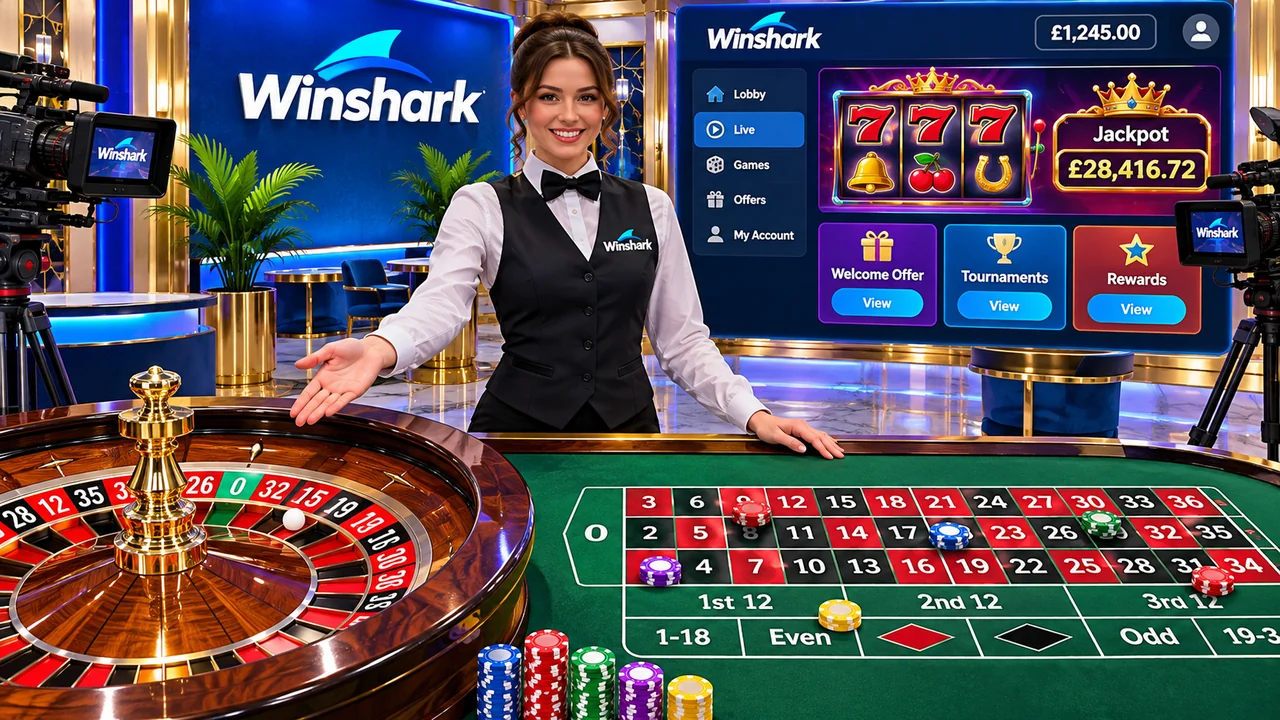
Behind a live lobby is a room that looks like a television gallery with gaming tables in it. Each table has a dealer, a set of cameras, a card shoe or a wheel, and sensors that read what physically happens: which pocket the ball settles in, which card leaves the shoe. That reading is what settles your bet, which is why the picture you see and the result you are paid on are the same event.
The studios are run by specialist suppliers rather than by the casino you log into. Firms such as Evolution and Playtech operate the rooms and licence the tables to many operators at once, which is why the same dealer and the same table can appear in several different lobbies. The operator's job is the account, the cashier and the lobby; the supplier's job is the table.
Some tables are not in a studio at all. A handful stream from a real floor in a land-based casino, where online players bet alongside people standing at the table. The interface is the same; the atmosphere and the pace are not, because the dealer is serving the room first.
Everything you need to tell those apart is written on the table tile and in the rules panel: the supplier's name, the table's name, the game variant and its limits. Checking a gambling licence covers the separate question of who is answerable for the account you hold.
One round, step by step
Live play runs on the dealer's clock rather than yours, and that single difference explains most of what feels unfamiliar at first.
- The betting window opens and a countdown appears. You choose a chip value and place it on the layout, and you can usually move or remove it until the timer ends.
- Betting closes. The interface locks and the stake is taken from your balance at that moment, not when the result arrives.
- The physical event happens: the ball is spun, the cards are dealt from the shoe, the dice are thrown.
- The sensors and the dealer's confirmation record the outcome, and the overlay marks winning positions.
- Settlement is applied to your balance, win or lose, and the history panel records the round with its own reference.
- The next betting window opens, often within seconds.
Two practical consequences follow. First, a bet you did not confirm before the timer ran out was never placed, so check the chip is on the layout rather than under your cursor. Second, every round leaves a record with a reference number in the game history, and that record is what support will look at if you query a settlement. It is worth knowing where the history panel lives before you need it.
What you will find in a live casino online lobby
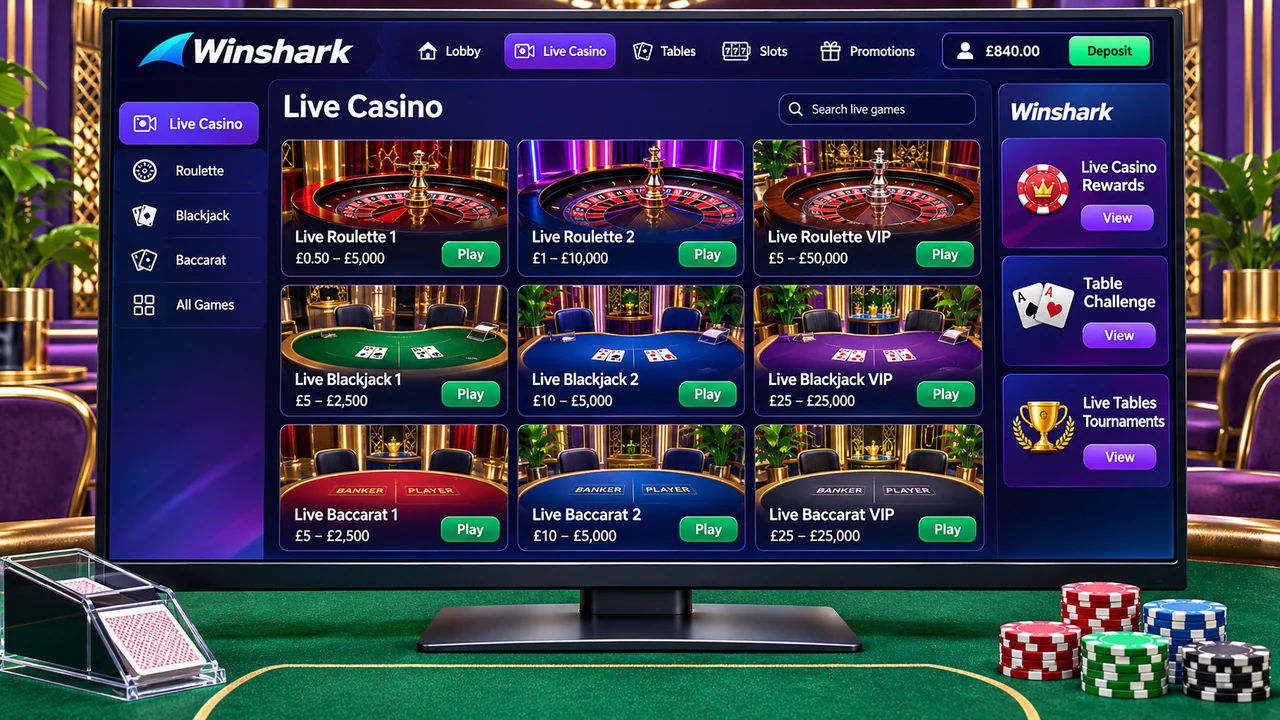
The lobby is usually sorted by game family rather than by supplier. The four classics account for most tables, with presenter-led formats filling the rest.
| Table | How it plays | Pace | What to read first |
|---|---|---|---|
| Roulette | Bet on numbers, colours, columns or sections; the wheel decides | Fast, with short betting windows on standard tables | Whether the wheel has one zero or two, and what the outside bets pay |
| Blackjack | Your decisions matter: hit, stand, split, double | Slower, and seats can be limited | The dealer rule on soft 17, blackjack payout and whether splitting is restricted |
| Baccarat | Back the player hand, the banker hand or the tie; no decisions after the bet | Quick, with a long history display | Commission on banker wins and what the tie pays |
| Casino poker variants | Play a hand against the house, with an ante and further bets | Slow, several decision points per round | The ante and bet structure, and which hands qualify |
| Game shows and wheel formats | A presenter runs a wheel or a bonus round with multipliers | Variable, with long gaps between rounds | Which segments pay what, and whether a bet qualifies for the bonus round |
Within each family there are variants: speed versions with shorter timers, tables with fewer seats, multi-hand blackjack, and side-bet-heavy layouts. Our rule guides for online roulette and online blackjack go through the bet types in detail, and the game formats overview places live tables alongside the other categories in a lobby.
Live tables against software tables: the real differences
A software table uses a random number generator and runs when you click. A live table waits for a dealer. The rules of the game itself are often identical, so the differences are practical rather than mathematical.
| Live dealer | Software table | |
|---|---|---|
| What produces the result | A physical wheel, shoe or dice, read by sensors and confirmed by the dealer | A certified random number generator |
| Pace | Set by the dealer and the countdown, shared with other players | Entirely yours; the next round starts when you say so |
| Minimum stakes | Generally higher, because a table has running costs | Often very low |
| Free play | Not available; there is no demo mode for a live table | Usually available in demo |
| Data use | Continuous video for as long as you sit there | Minimal once loaded |
| Bet records | Round history with a reference, plus the video feed | Round history in the game |
The no-demo point is the one that catches people out. You cannot practise a live table for free, because there is a real dealer and a real table being used. If you want to learn a layout before staking anything, do it on the software version of the same game and then move across; our note on what demo play does and does not show sets out the limits of that approach.
One more difference belongs here. Statutory stake limits for online slots in Great Britain do not apply to live dealer tables, which are governed by each table's own minimum and maximum. That makes the table tile the only place the limits are stated, and it makes reading it a habit worth having.
Limits, side bets and the arithmetic of a layout
Every live table publishes a minimum and a maximum, and the maximum is usually stated per bet type rather than per round. Outside bets on roulette carry a higher maximum than straight-up numbers, for example, because the payout is smaller. The tile in the lobby shows the range; the rules panel shows the detail.
Some of the arithmetic you can do yourself, and it is the most useful thing on this page. A single-zero roulette wheel has 37 pockets and pays 35 to 1 on a straight-up number. Over 37 equally likely outcomes, 36 units come back for every 37 staked, which is 36 divided by 37, or about 97.3%. A double-zero wheel has 38 pockets and the same 35 to 1 payout, so the figure becomes 36 divided by 38, or about 94.7%. Nothing about the dealer, the studio or the streak display changes those two fractions.
Side bets are where the arithmetic usually moves against the player hardest. A pair bet, a perfect-pairs variant or a progressive side wager pays a headline multiple and wins rarely, and the published return for the side bet is normally well below the return for the main game. They are an entertainment choice, not a value one, and the rules panel states what each pays.
For stakes and settlement the money question is simple: each round is a separate transaction against your balance, debited when betting closes and credited when the dealer's call is applied. An hour at a table is dozens of those, which is why a session feels different from a few slot spins at the same stake. Our note on RTP and volatility explains why the published figure describes a long run rather than your evening.
Chip values and the mistake they cause
The chip selector is the control most worth a second look. You pick a value, then place it, and the selector stays on that value until you change it. The commonest error in live play is not a bad bet but a bet at the wrong size: a chip left on a higher value from the previous round, then tapped onto several positions while the timer runs down. Table layouts repay the same way whatever the chip value, so the result is a session that drains faster than planned for no extra entertainment.
Two habits deal with it. Set the chip to the value you intend for the session before the first round, and read the total staked figure that most interfaces display next to the timer rather than counting chips on the layout. If the interface offers a repeat-bet or double-bet button, understand what each does before you use it mid-countdown, because a double applied twice is four times the stake you had in mind.
Connection, data and dropping out mid-round
A live table is a video stream, so it uses data continuously while you sit at it. On a phone, an hour of live roulette takes a noticeable bite out of a monthly allowance in a way that slots do not, and most interfaces offer a lower video quality setting for exactly that reason. On wifi it is a non-issue; on mobile data it is worth a thought.
What happens if your connection drops depends on when it drops. If it fails before betting closes, the bet was not placed. If it fails after betting closes, the round continues without you and is settled normally: the dealer does not wait, and your balance will reflect the result when you reconnect. In games with decisions, such as blackjack, a disconnection during your turn is usually resolved by a stated default in the rules panel, which is one more reason to read it.
Practical habits for live play on a phone: use landscape for anything with a betting grid, because the chips are small in portrait and mis-taps cost real money; check the bet confirmation before the timer ends rather than after; and avoid switching apps mid-round, since some interfaces pause the stream and you lose sight of the countdown.
Live casino and bonuses: read the contribution table
This is where live tables and promotions most often fail to meet. Welcome offers are usually built around slots, and the contribution table inside the bonus terms frequently gives live tables a partial rate or excludes them outright. Stakes placed at an excluded table do not move the wagering requirement at all, and at some operators playing an excluded game while a bonus is active can void the bonus.
There is a second clause to look for: a maximum stake while a bonus is live. Live table minimums are higher than slot minimums, so it is quite possible for a table's minimum bet to sit above the bonus maximum stake. In that situation the table is effectively off limits until the bonus is finished or dropped, whatever the contribution table says.
If live play is what you actually enjoy, the sensible order is to check the contribution table and the stake clause before claiming any offer, and to pass on offers that do not fit. Our page on casino bonus terms and withdrawal restrictions goes through the clauses one by one, and the withdrawal process explains what restricted funds do to a payout request.

The rules panel is the contract
Live tables of the same name are not identical. Two blackjack tables in the same lobby can differ on whether the dealer stands on soft 17, whether a split hand can be doubled, what a natural pays and which side bets are offered, and each of those changes the published return. Two roulette tables can differ on zeros and on whether the layout includes racetrack betting. The rules panel on each table states its own version.
- Variant and zeros. One zero or two on roulette; the number of decks and the dealer rule on blackjack.
- Payouts. What a natural blackjack pays, what the tie pays at baccarat, what each roulette bet pays.
- Limits. Minimum and maximum per bet type, not just per round.
- Side bets. Which are available and what each returns.
- Disconnection rule. What the table does with an unfinished decision.
- Published return. Many suppliers state a figure for the main game and separate figures for side bets.
Thirty seconds in that panel is the single highest-value habit in live play, because it is the only place the table's actual terms live. The lobby tile sells; the panel states.
Before your first live table
- Confirm the operator's licence and the domain on the Gambling Commission's public register at gamblingcommission.gov.uk.
- Finish identity verification before you deposit, so a first payout is not held up by paperwork. Withdrawal identity checks lists what is usually asked for.
- Check that your deposit method can also receive a withdrawal; our payment methods guide and debit card page cover which routes work both ways.
- Learn the layout on a software version of the same game, since live tables have no demo mode.
- Pick a table whose minimum fits the session you intended, not the one that looks busiest.
- Open the rules panel and read the variant, the payouts and the limits.
- Use wifi if you can, and landscape if you are on a phone.
- Set your deposit limit while nothing is staked and you are deciding calmly.
- Note where the round history sits, so a query later starts with a reference rather than a description.
None of that takes long, and it removes almost every avoidable complaint about live play: a bet that was never confirmed, a table whose rules were not the ones assumed, a bonus that was never going to count, a payout slowed by a document. Gambling is for adults aged 18 and over; stake only what you can afford to lose, and treat a live table as entertainment with a price rather than a way to make money.
Live casino questions
Is a live online casino game really dealt by a person?
Yes. The cards, wheel or dice are physical and handled by a dealer in a studio or on a casino floor, with cameras and sensors recording the outcome. The software handles your betting interface and the settlement that follows each round.
Can I try a live casino table for free?
No. There is no demo mode for a live table, because a real dealer and a real table are in use. If you want to learn a layout first, play the software version of the same game, which normally does have a free mode.
Why are live table minimums higher than slot stakes?
A live table carries running costs: a dealer, a studio, cameras and streaming. Those costs are reflected in the minimum bet, which is why the cheapest live table in a lobby still costs more per round than the cheapest slot spin.
Do live casino games count towards a welcome bonus?
Often only partially, and sometimes not at all. The contribution table in the bonus terms decides it, and a separate maximum-stake clause can sit below the table's own minimum bet. Check both before claiming an offer if live play is what you want.
What happens if my internet drops during a live round?
If the connection fails before betting closes, no bet was placed. If it fails afterwards, the round is played out and settled without you, and the result appears when you return. Tables with player decisions apply a default stated in the rules panel.
Does a live dealer table have a published return figure?
Usually yes, stated by the supplier in the rules panel, with separate figures for side bets. It describes the long-run design of that specific variant, not what will happen in your session, and it differs between tables that share a name.
Game-data note: Rules and any published values refer to the cited provider page; an operator may use a different configuration.